
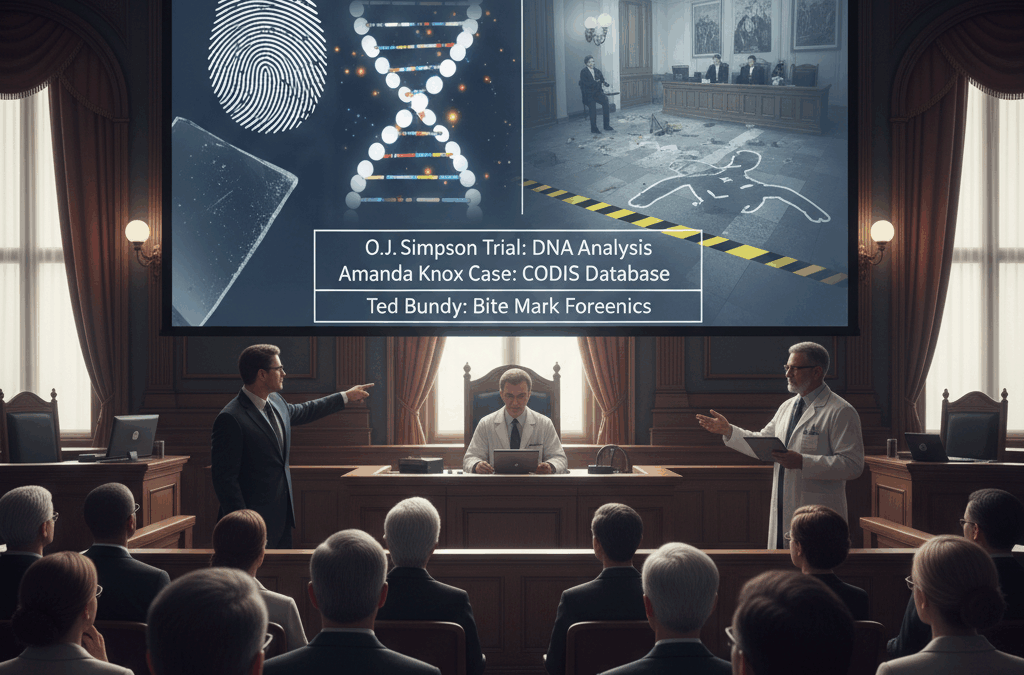
Case Studies: Famous Trials Influenced by Forensic Evidence
Forensic evidence has played a transformative role in the justice system, turning the tide in countless famous trials and landmark court cases throughout history. Advances in digital forensics, DNA analysis, fingerprint identification, and expert testimony have not just influenced but reshaped our understanding of truth and justice. This article dives into gripping case studies where forensic breakthroughs were pivotal, explores the evolution of forensic science in court, and provides insights into how justice is increasingly #SolvedByScience and #ForensicScience.
The Pioneering Power of Fingerprint Evidence
One of the first cases to showcase forensic evidence’s enormous impact in courtrooms was the 1911 conviction of Thomas Jennings in Illinois. This case remains legendary as the first criminal trial in the United States to rely on fingerprint evidence. During the investigation, police found a fingerprint on a freshly painted railing at the murder scene. Not only did this scientific discovery link Jennings to the crime scene, but it also set a precedent for fingerprint evidence’s admissibility in court — an innovation rapidly adopted worldwide.
Defense attorneys challenged the validity of fingerprint science, organizing public demonstrations and legal appeals. However, the Illinois Supreme Court ruled decisively in favor of admitting fingerprint evidence, marking a turning point for #ForensicTechnology in legal history. Today, fingerprint identification is standard in justice systems across the globe, emphasizing the ongoing influence of this forensic breakthrough.
DNA Evidence Breakthroughs: The Pitchfork Murders
Perhaps no advancement has had a more profound impact than DNA forensic analysis. In 1986, British scientist Alec Jeffreys pioneered the use of DNA fingerprinting to solve the notorious Pitchfork murder case. Two girls were brutally murdered in Leicestershire, and suspicion initially fell upon a local youth. When early tests ruled the boy out, Jeffreys and police launched the world’s first mass DNA dragnet, testing over 5,000 local men. They ultimately caught Colin Pitchfork, who had persuaded a colleague to take the test for him — a fatal mistake revealed by thorough forensic investigation.
The Pitchfork case became a global template for using #DNAEvidence in criminal justice. Not only did it lead to the conviction of a murderer, but it also exonerated innocent suspects, showcasing forensic evidence’s dual power to convict and clear. Landmark cases like this highlight the critical evolution of #ForensicBreakthroughs and their continuing role in the justice system.
The O.J. Simpson Trial and the Limits of Forensic Science
Few trials have etched forensic evidence as deeply into the public imagination as the O.J. Simpson case. The 1995 trial became a courtroom drama of global proportions. DNA, hair, and blood samples pointed to Simpson’s involvement, but defense attorneys expertly cast doubt on the reliability, accuracy, and handling of forensic evidence. Allegations of evidence tampering and procedural errors shook the credibility of the case against Simpson, resulting in an acquittal — despite compelling #ForensicScience findings.
This trial not only underscored the importance of expert witnesses and the chain of custody but also revealed that forensics is not infallible. The legacy of #FamousTrials like Simpson’s continues to spark debate on the reliability of forensic analysis, emphasizing the need for constant advances and integrity in methodology.
When Science Sets the Innocent Free: The Central Park Five
Forensic evidence can also pave the way for justice after wrongful convictions. In 1989, five teenagers were convicted for the brutal assault of a jogger in New York’s Central Park, largely on the basis of coerced confessions. Years later, DNA testing — the gold standard in forensic evidence — revealed that none of the five were connected to the crime. The real perpetrator confessed, and his DNA matched the scene, fully exonerating the so-called Central Park Five in 2002.
Cases like this illustrate not only how #JusticeSystem and #ForensicEvidence can intersect powerfully but also highlight the dangers of relying solely on circumstantial and unscientific methods. Today, #DNAAnalysis and other forensic innovations help prevent and correct miscarriages of justice.
Digital Forensics and Modern Justice: New Frontiers
The twenty-first century has seen explosive growth in digital forensics, changing how investigators solve cybercrime, fraud, and high-profile cases involving electronic evidence. Digital forensic experts recover deleted files, track digital footprints, and use advanced tools to detect fraud and manipulation. In recent years, cases involving AI-generated data, blockchain analysis, and social media forensics have made headlines, pushing #DigitalForensics and #AIinForensics to the forefront of crime-solving technology.
A notable example is the 2020s rise in cybercrime cases solved by tracing bitcoin transactions or unmasking digital manipulation in fraud investigations. As methods grow more sophisticated, so does the criminal toolbox — but forensic science continues to adapt in its pursuit of truth and justice.
Famous Trials Influenced by Expert Witnesses
Expert witnesses have been the linchpin in many #LandmarkCourtCases. Their testimony can unite science and law, often swaying the outcome of a trial. Some of the most famous expert-driven cases include:
-
The conviction of serial killer Ted Bundy, where bite-mark analysis (forensic odontology) was crucial in linking him to his victim.
-
The Amanda Knox case in Italy, featuring intense scrutiny of forensic DNA analysis and claims of evidence contamination.
-
The “Butcher Baker” Robert Hansen case, where ballistics and forensic geology were instrumental in piecing together the story and securing a conviction.
Forensic Breakthroughs in Criminal Justice: Ongoing Evolution
The progression from fingerprints and blood types to DNA and now digital forensics underscores an evolving landscape where forensic science repeatedly delivers justice and corrects errors. Current hot topics and future directions in forensic science include:
-
AI-powered pattern recognition in digital forensics
-
Virtual autopsies using 3D imaging to reveal truths non-invasively
-
Blockchain-enhanced evidence security
-
Rapid DNA testing technologies
Each advancement not only strengthens the justice system but also poses new challenges for expert witnesses, legal professionals, and scientists to address the growing complexity of criminal acts.
Conclusion: The Future of Justice Is Forensic
Forensic science stands as a cornerstone in the pursuit of justice, continuously evolving to meet the needs of modern criminal investigations. From the earliest use of fingerprints to the breakthroughs in DNA analysis and the rise of digital forensics, forensic evidence strengthens the justice system by revealing truth, holding the guilty accountable, and exonerating the innocent. While advances in technology have vastly improved accuracy and speed, challenges like wrongful convictions from flawed methods emphasize the need for rigorous standards and ongoing innovation. Ultimately, forensic science fosters fairness, trust, and integrity in legal processes, bridging science and law to create a more equitable justice system. It empowers society by ensuring that justice is served with both accuracy and impartiality, affirming its vital role in social justice and crime-solving in today’s complex world. #FamousTrials #ForensicScience #SolvedByScience #JusticeSystem #ExpertWitness #ForensicBreakthroughs