Expert Witnesses: The Impact of Testimony in Criminal Trials
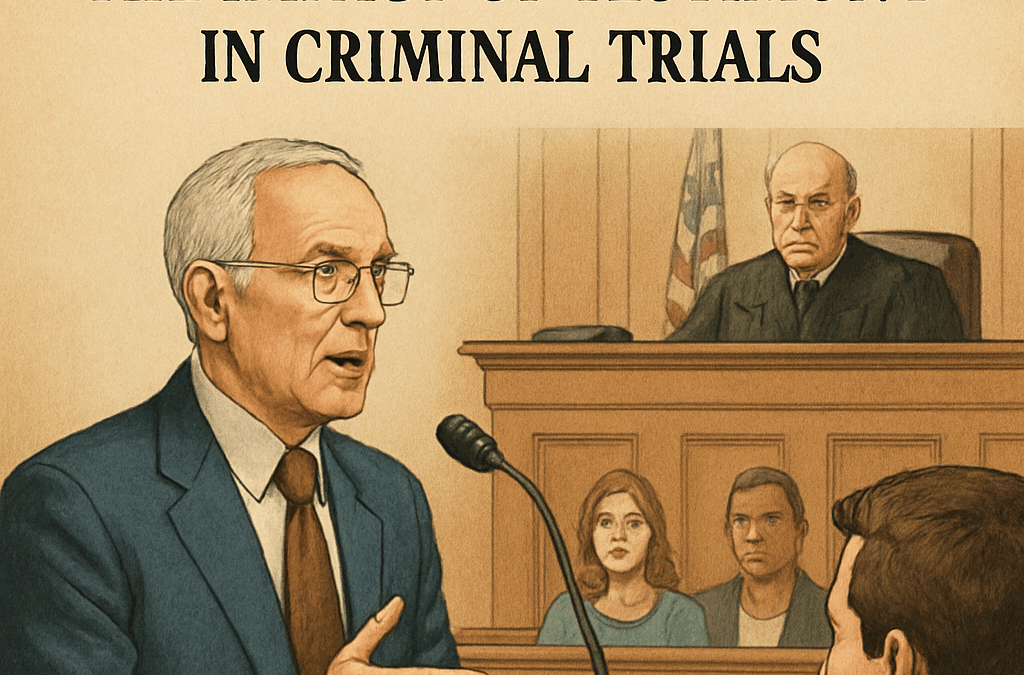
Have you ever watched a tense court drama and thought, “Wow, that woman on the stand really changed everything”? Often, that’s the expert witness—a figure whose words can turn a trial on its head and whose testimony might be the difference between conviction and acquittal. But who are these experts, what rules shape their role, and why does their testimony have such a powerful effect on criminal trials?
What Is an Expert Witness?
An expert witness isn’t just anyone with a strong opinion or a good resume. In legal terms, this is someone whose background—education, training, skills, or experience—sets them apart in a specific field, from forensic science to accounting. Courts rely on their expertise to help juries and judges understand complex evidence that would otherwise be outside laypeople’s everyday knowledge.
For example, in a murder trial, an expert might be called to explain blood spatter patterns, while in a fraud case, another may unravel the technical details of financial records. Their independence and credibility are crucial: the court expects any expert to be objective and to present facts without bias towards either the prosecution or the defense.
Why Expert Witness Testimony Matters
Put simply, expert witnesses have the power to shape the outcome of criminal trials. Their testimony is treated with special weight because it interprets technical or scientific evidence—think DNA tests, digital footprints, or complicated psychological assessments—that is usually far beyond a jury’s natural understanding.
Research consistently shows that when expert testimony is clear, relevant, and tied directly to the facts of the case, juries are much more confident in their decisions. For instance, when an expert can break down how certain forensic evidence supports (or refutes) a story, the jury feels equipped to see past “he said, she said” arguments and focus on what the facts actually mean.
Jury members often heavily rely on expert opinions—sometimes even more than they should, according to some legal scholars—because they feel out of their depth with scientific or technical information. When the expert is credible and presents information clearly, jurors are likely to accept their conclusions. In cases involving sensitive issues such as mental health, medical evidence, or the reliability of a witness’s memory, the role of the expert becomes even more decisive.
The Path to the Courtroom: Rules and Requirements
But not just any specialist can walk into the courtroom and take the witness stand. There are strict rules about what makes someone an expert and what counts as admissible expert evidence. In the United Kingdom, for example, the Criminal Practice Directions and Criminal Procedure Rules put a spotlight on the responsibilities of expert witnesses: their overriding duty is always to the court, not to the party paying their fee.
When an expert is preparing evidence for court, they must:
- Present opinions impartially and base conclusions only on their expertise.
- Disclose all relevant information—even facts that may challenge their conclusions.
- Make clear what is fact, what is assumption, and where uncertainty exists.
- Reveal all records and supporting materials if requested, both to the court and the defense.
- Avoid conflicts of interest and always maintain transparency, including any challenges to their credibility or methods in the past.
This commitment to impartiality and honesty is at the heart of trust in the expert system.
Challenges: Cross-Examination and the Risk of Bias
Despite these safeguards, using expert evidence isn’t without pitfalls. Cross-examination by opposing lawyers is meant to expose inconsistencies, challenge the logic of conclusions, and, if appropriate, question the expert’s qualifications or assumptions. Sometimes an expert may overstate their certainty, be unfamiliar with new scientific developments, or let personal bias color their opinions.
It’s not unheard of for trials to go off the rails because an expert relied on unreliable methods, provided misleading information, or simply lacked the necessary up-to-date expertise. High-profile miscarriages of justice have led courts in recent years to be especially vigilant, scrutinizing an expert’s background, the scientific basis for their opinions, and their past professional record.
Real-World Cases: The Impact in Action
Consider cases involving cutting-edge forensic science, like developments in DNA analysis. An expert might testify that a DNA sample “almost certainly” matches a defendant. The weight of this statement can be tremendous. If the jury doesn’t understand probability or the risk of contamination, the expert’s interpretation may carry even more value. This is why courts now increasingly encourage experts to explain not just their conclusions but also the limitations of their field, avoiding technical jargon or overstated claims.
Sometimes, experts are also called in to explain less tangible issues—such as the impact of traumatic experiences on witness memory, or how certain psychological conditions may influence a defendant’s behavior. Such testimony, when communicated clearly and checked by thorough cross-examination, has been shown to improve the fairness of verdicts and sentencing.
At the root of every expert testimony is a real human story. A jury’s trust in an expert can mean life-altering consequences for someone accused of a crime. That’s why it’s so critical for experts to communicate clearly, for courts to scrutinize credentials, and for both sides to confront weaknesses and strengths in each report. Good expert evidence is written and delivered with clarity, candor, and the humility to admit where uncertainty exists.
Final Thoughts
Expert witnesses are not just cogs in the legal machine. They are trusted guides, helping ordinary people—jury members, judges, and even the accused—navigate the complex maze of technical, scientific, and medical evidence. Their testimony, when presented with rigor, integrity, and plain language, is a vital pillar of justice. As courtrooms become more technologically advanced and legal standards adapt, one thing remains clear: the impact of expert witnesses on criminal trials is here to stay, and their words will continue to carry enormous weight.