
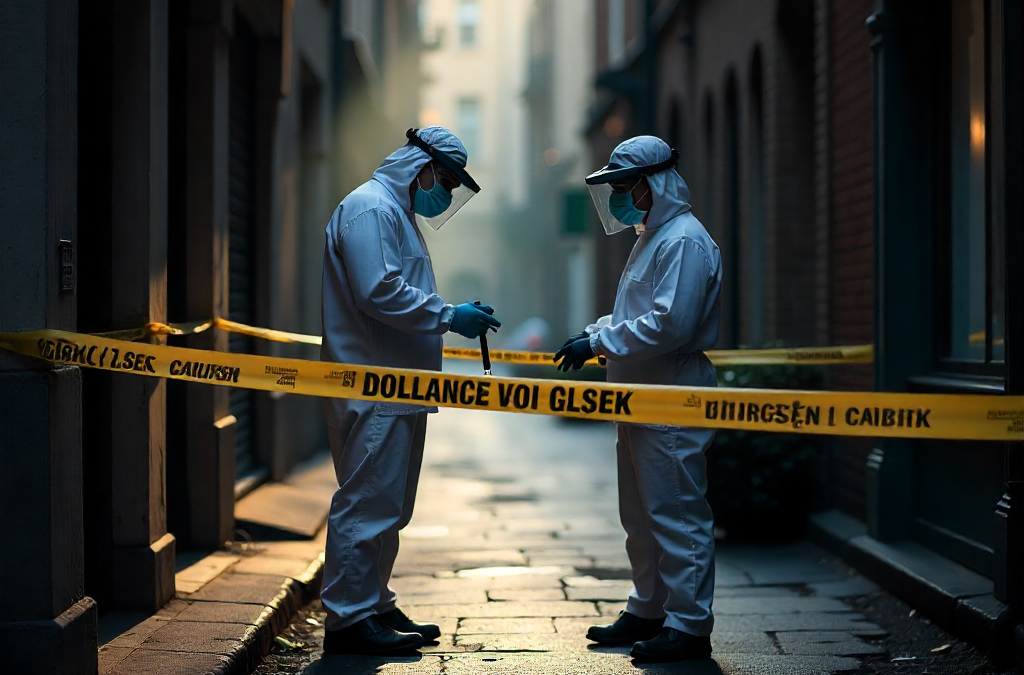
Crime scene investigation (CSI) is the disciplined process of identifying, documenting, collecting, and preserving physical evidence so that the truth about a crime can be reliably presented in court. Done well, it protects the innocent, strengthens cases against the guilty, and underpins public confidence in the justice system.
What crime scene investigation really is
CSI is more than “forensics in a lab”; it begins the moment authorities arrive and continues until every relevant item has been documented, collected, and transferred under strict controls for analysis. A crime scene can include any location where evidence may exist: the primary location of the offense, vehicles, routes of escape, digital devices, and secondary sites like dumpsters or nearby buildings.
A typical CSI team includes first responders, dedicated crime scene technicians, detectives, and specialist forensic scientists (for example, DNA, fingerprints, ballistics, digital forensics), all working to reconstruct what happened and who was involved. Their shared objective is to turn chaotic, time‑sensitive environments into carefully recorded evidence that can withstand legal scrutiny months or years later.
Step 1: Securing and controlling the scene
The first priority at any scene is life and safety: providing medical aid, removing immediate hazards, and ensuring there is no ongoing threat. At the same time, responders must prevent unnecessary movement of objects, restrict access, and quickly establish a perimeter that is usually larger than the obvious area of interest.
From a forensic standpoint, every additional person who walks through a scene introduces contamination risks such as footprints, transferred fibers, or moved items. Access control logs, physical barriers, and clear briefings ensure only essential personnel enter, and that each person’s presence can later be explained in reports or testimony.
Step 2: Preliminary survey and scene assessment
Once the scene is secure, the lead investigator or crime scene specialist conducts a careful walkthrough to gain an initial understanding of what likely occurred. This survey identifies obvious evidence, fragile or transient traces (like footprints in soil, odors, or wet blood), and focal points such as points of entry, victim location, or weapon placement.
The team distinguishes between primary and secondary scenes, determines the boundaries of each, and develops working hypotheses that will shape search strategies and collection priorities. Entry and exit routes for personnel are planned to minimize disturbance and avoid crossing areas where trace evidence is expected.
Step 3: Systematic documentation
Documentation is the backbone of CSI because if a condition is not recorded, it may as well not have existed in the eyes of the court. Investigators use layers of documentation, including overall, mid‑range, and close‑up photographs; video walkthroughs; sketches with measurements and orientation; and detailed notes capturing time, weather, lighting, and positions of key items.
This record‑keeping is chronological and contemporaneous, often including who discovered each item, how it was handled, and where it moved during scene processing. Good documentation allows later reviewers—prosecutors, defense, and independent experts—to reconstruct conditions without re‑visiting the original location.
Step 4: Evidence recognition and search patterns
Recognizing what constitutes evidence is a skilled task that goes beyond simply collecting what is obvious. Investigators look for biological materials (blood, saliva, hair), physical objects (weapons, shell casings, tools, glass), trace materials (fibers, paint, soil), impression evidence (footwear and tire marks), and increasingly, digital sources such as phones, computers, and CCTV systems.
To ensure no area is overlooked, structured search patterns are used, such as grid or line searches in open spaces, zone or sector searches in multi‑room buildings, and spiral methods in confined locations. The chosen pattern depends on terrain, case type, and resources but always aims for complete, repeatable coverage that can be explained and defended later.
Step 5: Collection, packaging, and preservation
Once identified, evidence must be collected, packaged, and stored in ways that preserve its integrity and future analytical value. Investigators typically handle one item at a time, using clean gloves and appropriate tools, recording its original position, then placing it into packaging specifically chosen for its type—for example, paper bags for damp biological samples to prevent mold, rigid containers for sharp objects, and specialized bags for digital devices.
Each item is labeled with a unique identifier, description, location found, date, time, and collector’s name, often accompanied by corresponding entries in logs and sketches. Inadequate packaging—such as sealing wet evidence in airtight plastic or allowing different items to touch—can degrade samples, cross‑contaminate traces, or create opportunities for defense challenges in court.
Step 6: Maintaining chain of custody
Chain of custody refers to the documented, unbroken record of every person who has had control of an item of evidence, from collection at the scene to presentation in court. Standard forms or digital systems record who collected each item, who received it, when transfers occurred, where it was stored, and for what purpose it was accessed.
From a legal standpoint, any unexplained gap in this record can lead to questions about tampering, substitution, or contamination, potentially resulting in evidence being excluded or given less weight. Robust chain‑of‑custody practices therefore protect both the integrity of the investigation and the rights of suspects and victims.
Step 7: Laboratory analysis and expert interpretation
After leaving the scene, evidence is distributed to relevant laboratories for specialized examination, such as DNA profiling, fingerprint comparison, ballistics testing, toxicology, or digital forensics. Each discipline has its own protocols, validation standards, and limitations, and results can be partial, probabilistic, or inconclusive rather than absolute.
Laboratory findings are interpreted in the context of the overall case: timelines, witness accounts, and other physical evidence are compared to see whether they corroborate or contradict one another. This integration of scene observations and lab results often leads to refined hypotheses about what occurred, who was present, and how events unfolded.
Step 8: Reconstruction, reporting, and testimony
Using physical evidence, scene measurements, and analytical findings, investigators work to reconstruct the sequence of events—where individuals moved, how injuries were inflicted, and in what order key actions occurred. Techniques such as bloodstain pattern analysis, trajectory analysis, and timing estimates from digital logs can be used to test competing scenarios.
The outcomes are captured in formal reports written in clear, neutral language that distinguishes observed facts from interpretations. In court, crime scene and forensic experts may testify about the methods used, reliability of techniques, and meaning and limits of their conclusions, helping judges and juries understand technical evidence well enough to make informed decisions.
Why proper CSI is critical to justice
Well‑executed CSI helps identify offenders by linking them to scenes through traces like DNA, fingerprints, toolmarks, or digital artifacts, while also excluding individuals who are not involved. Objective physical evidence can confirm or challenge witness statements and alibis, reducing the system’s dependence on potentially biased or mistaken human memory.
Inadequate or sloppy scene work, by contrast, can lead to contaminated samples, lost items, or broken chains of custody, giving defense teams strong grounds to challenge key evidence or have it ruled inadmissible. At its worst, flawed CSI contributes to wrongful convictions or failed prosecutions, eroding public trust in law enforcement and the courts.
Myths vs reality in CSI
Popular media often suggests that every case yields pristine DNA or fingerprints that quickly pinpoint a single suspect, but in reality many scenes produce limited, degraded, or mixed samples that require cautious interpretation. Similarly, laboratory backlogs and the complexity of modern analyses mean that results often take weeks or months, not the hours portrayed on television.
Another misconception is that one dramatic piece of evidence “proves” guilt; in practice, responsible investigators and courts look for convergence across multiple independent lines of evidence before drawing strong conclusions. CSI is therefore less about sudden revelations and more about meticulous, cumulative work that reduces uncertainty step by step.
The impact of digital and modern forensics
Modern crime scenes increasingly involve significant digital dimensions, from CCTV systems and mobile phones to vehicle telematics and data from connected devices. Preserving and analyzing this data require close coordination between traditional CSI teams and digital forensics specialists, along with careful consideration of privacy, encryption, and data volume challenges.
These sources can provide precise timelines, locations, and interactions that are difficult to obtain from physical traces alone. When integrated with traditional evidence, digital forensics can dramatically strengthen reconstructions of events, but only if collection and handling meet the same rigorous standards as at the physical scene.
Why CSI standards matter beyond law enforcement
For legal professionals, understanding CSI processes helps in assessing case strength, identifying vulnerabilities, and formulating effective strategies around evidence challenges or further testing requests. For corporate security, insurance, and other risk‑focused organizations, CSI principles inform incident response protocols that protect potential evidence until specialized teams arrive.
Even for members of the public, recognizing why scenes are cordoned off and why seemingly simple questions cannot be answered immediately can foster cooperation and patience during investigations. Ultimately, rigorous crime scene investigation is a cornerstone of fair, evidence‑based justice systems, turning the uncertainty of a chaotic event into a structured, reviewable body of proof.